
Mk48.io
Game info
Most .io games drop you into a simple loop of eat, grow, repeat. Mk48.io does something sharper. Developed by Softbear Studios, this browser-based multiplayer naval combat game puts you at the helm of a warship and asks a question that gets more interesting every time you respawn: how far can you push your luck on open water? You spawn as a tiny vessel, collect crates scattered across the sea, sink rival players, and climb through ten progression levels that transform you from a forgettable blip on someone's radar into the kind of threat that makes other captains steer away. It is fast, tense, and surprisingly tactical for something you can launch in a browser tab with zero downloads.
The roster is where Mk48.io flexes hardest. Forty-three ship models, each inspired by real-world warships, spread across a wild range of vessel classes. Motor torpedo boats sit at the lower tiers, armed with multiple torpedoes and the occasional gun. Corvettes and destroyers carry heavier armaments. Cruisers split the difference between nimble escorts and raw firepower. Battleships and dreadnoughts bring immensely powerful main cannons and may even carry a small complement of aircraft for anti-submarine defense. Then things get exotic. Submarines dive beneath the surface, invisible to certain attacks but forced to resurface for some weapon systems. Hovercraft glide across land and water alike. Rams exist purely to crash into enemies. Dredgers reshape the terrain itself, creating new land ahead of their path and destroying old land by sailing over it. Icebreakers plow through frozen sheets without a scratch. Aircraft carriers command squadrons that follow your cursor to strike targets. Every class changes how you think about the map, your opponents, and your own survival.
Weapons are just as varied. Nine categories keep engagements unpredictable: torpedoes that can track targets with sonar, missiles that rip through the air faster but turn worse, unguided rockets, rocket torpedoes that deploy against nearby submarines, SAMs for swatting down aircraft and incoming missiles, rapid-fire gun turrets, depth charges dropped on pursuers or submerged subs, long-lasting mines, and player-directed aircraft. Layered on top of that are three sensor systems — visual tracking, radar for surface contacts, and sonar for underwater threats — that give combat a genuine strategic texture. Knowing where an enemy is matters, but so does knowing how they can see you.
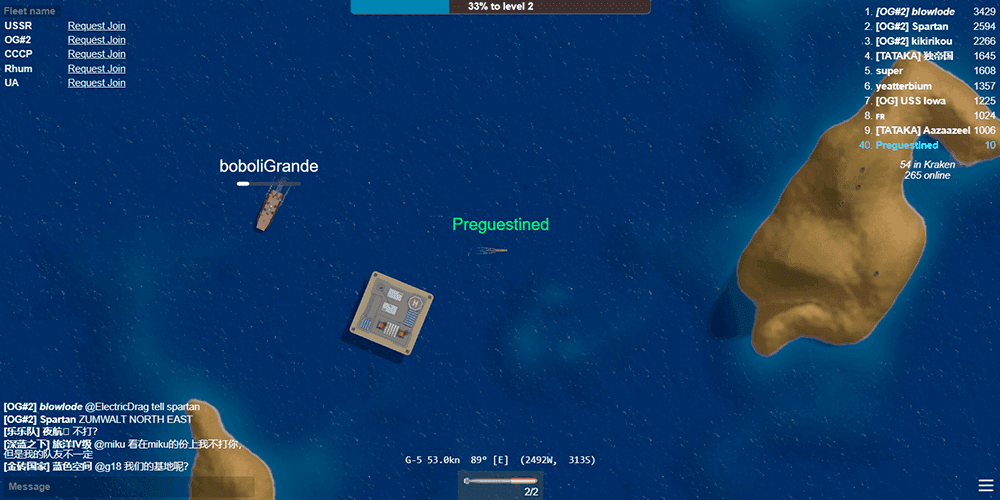
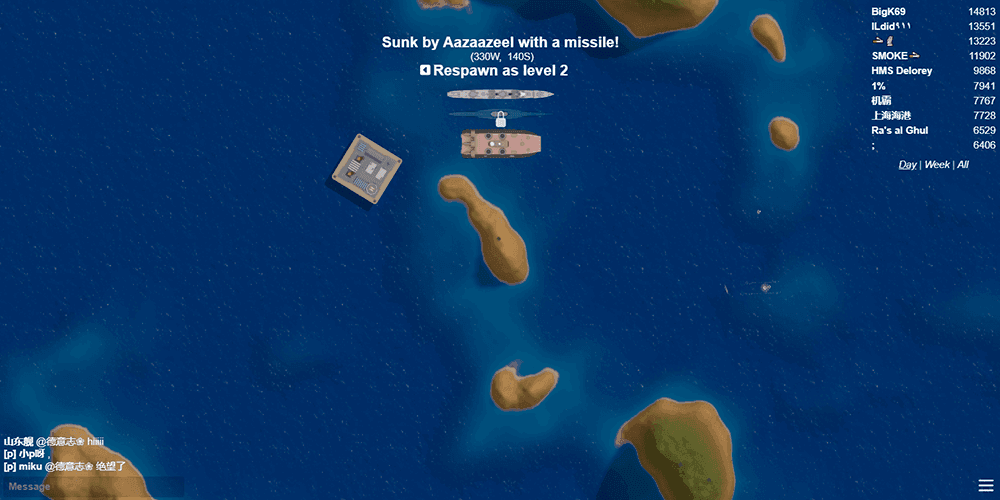
In practice, all of this creates a risk-reward loop that keeps pulling you back. Early on you move like prey, drifting from crate to crate, watching the minimap, dodging anything bigger. Crates are not just points; they are speed, firepower, confidence. Grab enough and your ship evolves into something that commands respect. Your weapons hit harder, your presence grows louder, and suddenly you are choosing fights instead of fleeing them. But growth attracts attention. The bigger you become, the more players see you as an opportunity, and multi-ship brawls erupt without warning. You rotate, fire, dodge, reposition, hunt crates mid-fight like a desperate reset button, and sometimes you pull it off in a moment of pure adrenaline. Sometimes you explode and stare at the respawn screen knowing you earned it.
What separates Mk48.io from typical arcade chaos is how much positioning and prediction matter. Torpedoes punish anyone who sails in straight lines. Duels reward the captain who shoots at where the enemy will be, not where they are. Stopping to aim is a confession, and confessions get punished. Over time you develop instincts: keeping escape lanes open, avoiding corners where you get boxed in, baiting bad shots and punishing reload windows, circling instead of charging head-on. The game rewards patience and aggression in equal measure. You can hug the edges and grow slowly but steadily, or push toward contested zones where the fastest growth sits right next to the fastest death. Joining a fleet through the in-game panel adds coordinated teamwork to the equation, while the ranking table and point chase feed a competitive appetite. Experienced captains can even venture into the Arctic biome, where trickier terrain and harsher conditions raise the stakes further. Every match starts you small and dares you to become the problem.