
StarBlast.io
Game info
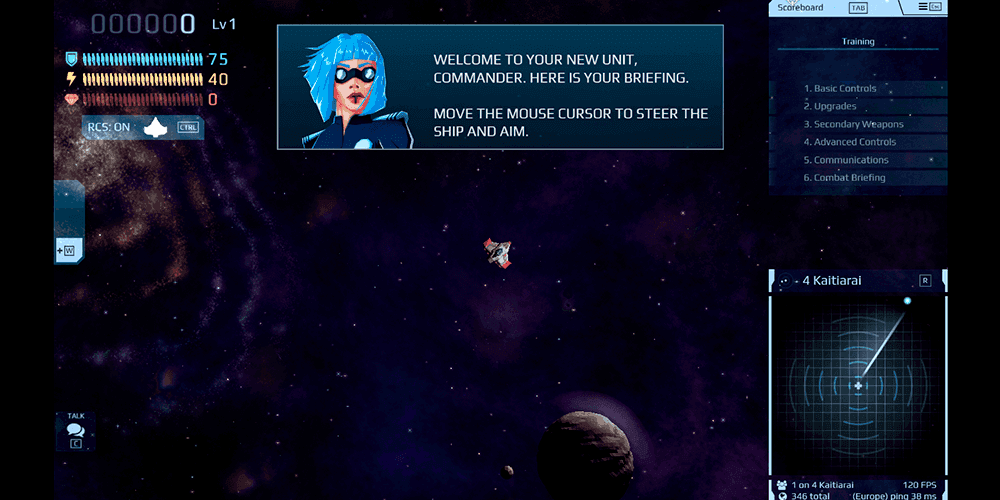
StarBlast.io wastes no time getting you into the action. Within seconds of loading in, you are piloting a small spacecraft through an asteroid-filled arena, blasting rocks to harvest crystals, and keeping one eye on the radar for incoming threats. Developed by Neuronality and released in November 2016, the game distills the .io formula into a tight space combat loop that is immediately satisfying and surprisingly tense. Controls are stripped down to arrow keys for movement and a mouse click to fire, yet every session demands constant decision-making. Do you keep mining to afford the next ship tier, or do you risk attacking a nearby player who might be carrying a cargo hold full of crystals? Losing a fight means dropping everything you have collected, which turns even a casual encounter into a high-stakes gamble. There is no story to speak of and no cinematic framing. StarBlast.io is pure momentum, built on the thrill of growing stronger in real time while dodging the players who want to take it all away from you.
Game Modes, Progression, and Tactical Variety
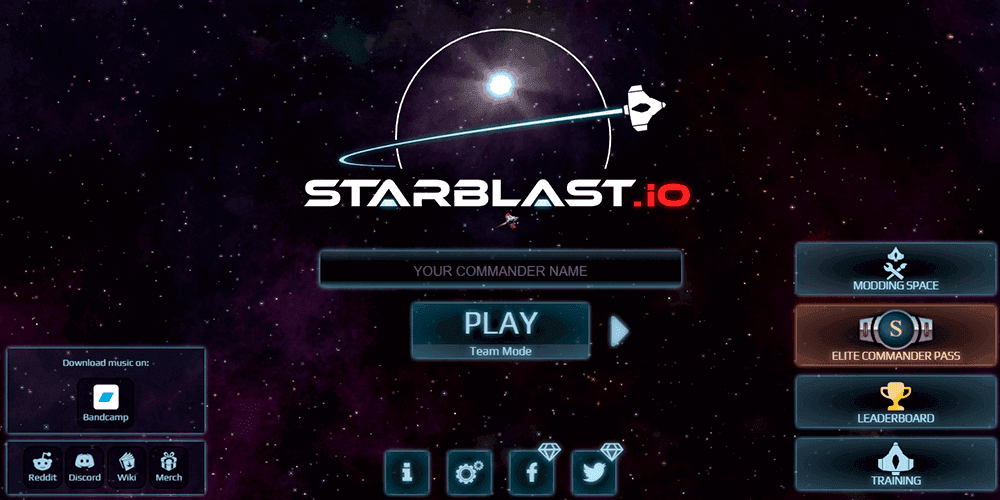
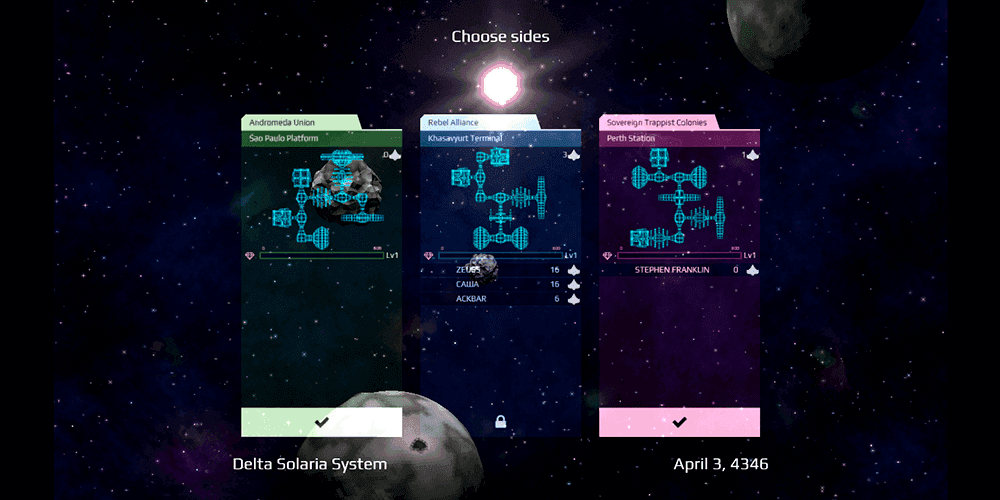
Four game modes keep the experience from settling into a single rhythm. Team Mode splits the lobby into three factions, each operating out of a base station that can be collectively upgraded by depositing crystals. This creates a genuine layer of strategy absent from most .io titles. Players naturally divide into miners who haul resources back to base, escorts who protect slower ships on return trips, defenders who guard the station, and strikers who raid enemy operations. Survival Mode strips away that cooperation and drops everyone into a free-for-all where the last ship flying wins. Invasion pits players against waves of AI-controlled threats, forcing temporary cooperation even among rivals. Pro Deathmatch narrows the focus to pure combat skill, assigning targets and tracking kills through a permanently running championship leaderboard.
Progression drives every minute of every match. Seven ship tiers and 31 unique vessels form a branching upgrade tree, and each ship handles differently thanks to distinct laser patterns, speed profiles, and durability ratings. On top of tier advancement, eight individual stats can be boosted with collected crystals: shield capacity, shield regeneration, energy capacity, energy regeneration, laser damage, weapon speed, ship speed, and ship agility. Allocating points is a meaningful choice. Pouring everything into weapon damage creates a glass cannon that crumbles under focused fire, while over-investing in shields leaves you unable to finish off retreating opponents. Secondary weapons, including torpedoes, mines, and deployable drones, add another dimension, letting players craft offensive or defensive loadouts that complement their chosen ship class. Because progression resets every match, success is always tied to moment-to-moment performance rather than accumulated account advantages.
Map Variety, Custom Games, and the Player Experience
Procedural generation ensures that asteroid fields and star system layouts shift from match to match, so you rarely fight across the same terrain twice. That variety matters more than it might seem at first glance. Asteroid density affects mining speed, available cover during firefights, and the viability of ambush tactics, meaning each map subtly reshapes how a session plays out.
Custom game tools extend replayability further. Players can create private sandboxes or public events by adjusting map size, asteroid strength, crystal values, ship speed, starting tiers, team count, and station size. The system has nurtured a community-driven modding scene that produces its own game variations and tournament formats, adding longevity well beyond the four standard modes.
StarBlast.io runs on browser, Android, iOS, and Steam, and the active player base keeps matchmaking quick across all platforms. Responsive controls and smooth performance remain consistent even on modest hardware, which is a credit to Neuronality's technical work over more than eight years of ongoing updates and balance patches. The Pro Deathmatch championship gives competitive players a persistent ranking to chase, while Team Mode offers enough collaborative depth to keep less aggressive players engaged.
That said, StarBlast.io leans heavily on its PvP core. The minimalist presentation, with simple ship models and sparse audio, serves the gameplay well but does little to draw in players who want visual spectacle or narrative context. Matches can also feel punishing when a lobby skews toward experienced pilots who dominate the crystal economy early. For those who click with its loop of mining, upgrading, and fighting, though, StarBlast.io delivers a competitive energy that few browser games can match.